How to Soak and Cook Pho Rice Noodles Perfectly (No More Mushy Noodles!)
This post may contain affiliate links, meaning I may earn a commission if you purchase through my links. This helps keep my content free. You can read my full disclosure here. Thank you so much for your support! 💗
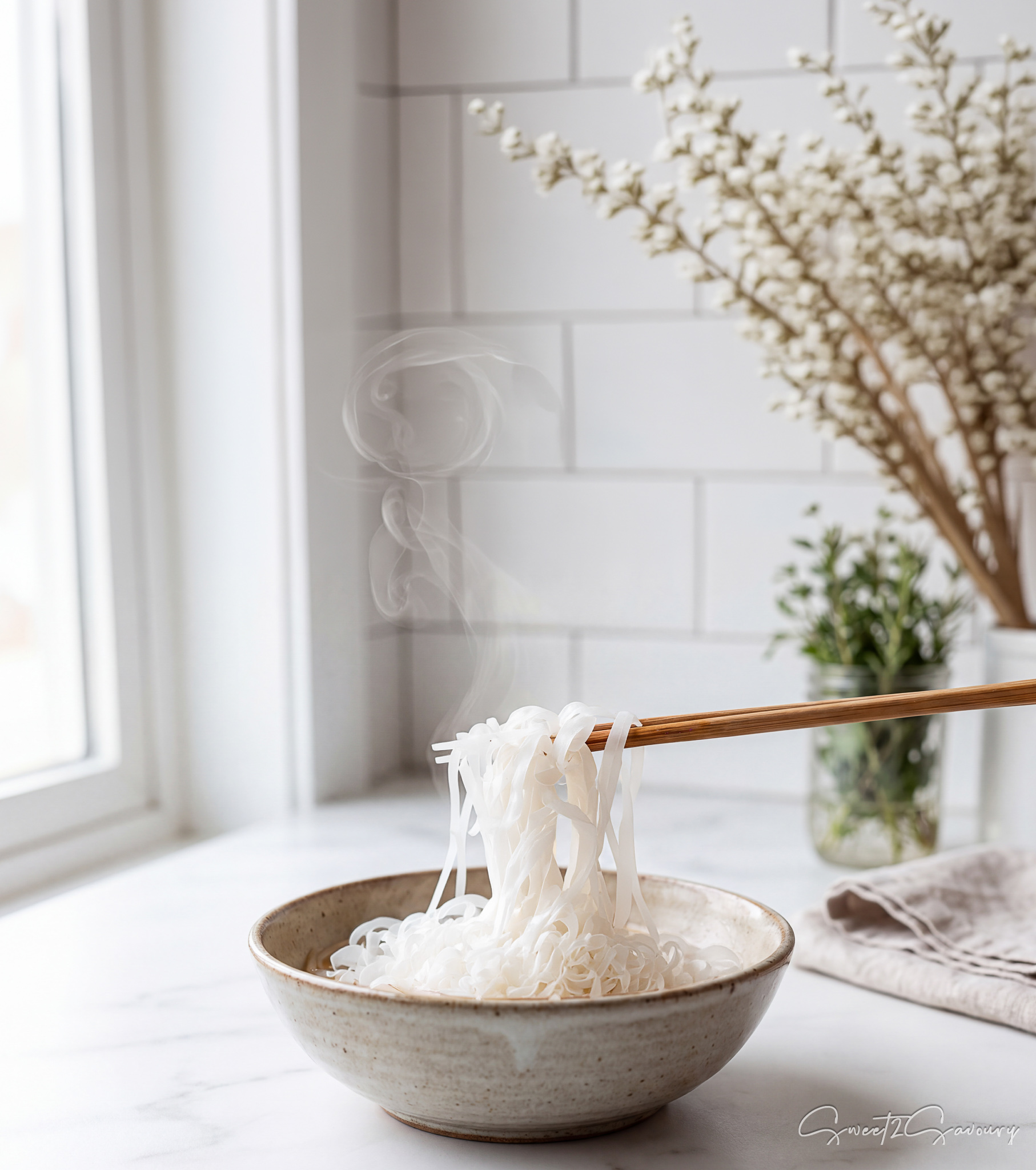
Have you ever made a gorgeous, fragrant pot of homemade Pho or a sizzling pan of Pad Thai, only for the noodles to turn into a soft, sticky, gloopy mess? The culprit usually isn’t the cooking process—it is how you prep them!
Getting that perfect, chewy bite from dry-packaged flat rice noodles (Bánh Phở or Rice Sticks) comes down to three things: noodle size, soak time, and their final purpose. If you are just boiling them straight out of the package, you are setting yourself up for heartbreak. Here is exactly how to fix it.
The Golden Rule: Lukewarm Water Only
Many noodle packages have conflicting instructions. Some say to use cold water (which takes entirely too long), while others tell you to use boiling water (which softens them far too fast).

For a perfectly chewy texture that holds its own in hot broth or a hot wok, you must soak your dry noodles in lukewarm water before you actually cook them. This gently rehydrates the rice flour to an ideal texture without cooking it prematurely.
Why It Matters
Never boil dry pho noodles directly in a pot of water, as you would with Italian pasta! The outside will turn to mush before the inside cooks, leaving you with a sticky, half-cooked disaster by the time you serve it.
Noodle Size & Soak Times
How long should they soak? It depends entirely on the width of the noodle. You will know they are ready when they have lightly expanded, are no longer completely transparent, and cleanly bounce back (uncoil) when you wrap a strand around your index finger.
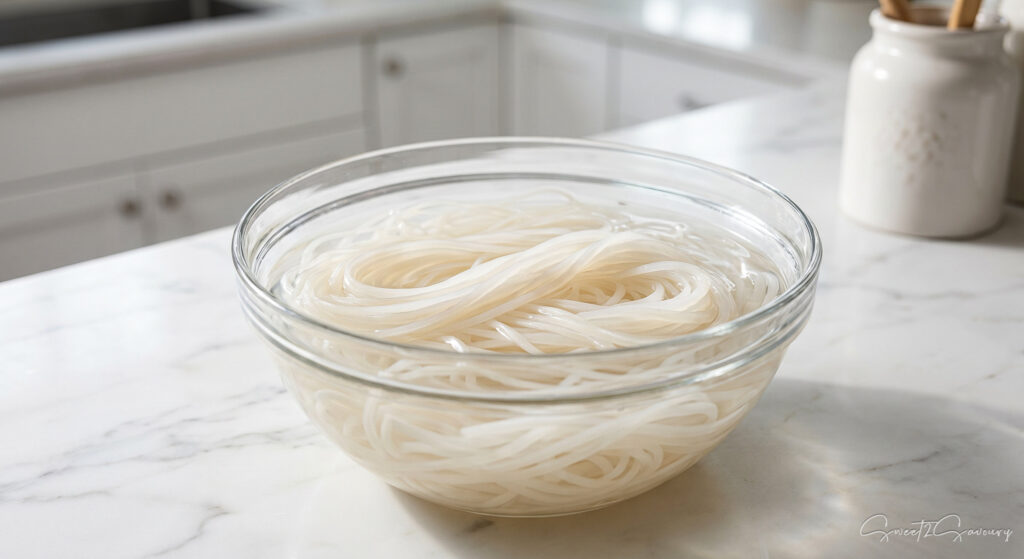
Here is a quick cheat sheet for soaking your noodles based on their size:
|
Noodle Size |
Soak Time in Lukewarm Water |
Best Used For |
|
Small (Thin) |
15 minutes |
Delicate soups, Phở |
|
Medium |
20 to 25 minutes |
Phở, Pad Thai |
|
Large (Wide) |
30 to 40 minutes |
Hearty, saucy stir-fries like Pad Kee Mao. |
💡Pro Tips for the Perfect Bite
- The 5-Second Blanch for Soups: For Phở, never cook the noodles in your precious broth! Portion your soaked noodles into a mesh strainer and dunk them into a separate pot of rolling boiling water for just 3 to 5 seconds. Stir them quickly, shake off the excess water, place them in the serving bowl, and pour your hot broth over the top.
- Under-Soak for Stir-Fries: If you are stir-frying, soak them for slightly less time. Toss the soaked noodles straight into the pan—they will absorb the sauces and liquid in your wok, finishing their cooking process packed with flavour!
- How to Store Leftovers: Got extra soaked noodles? Don’t leave them sitting in water! Drain them completely, place them in a zip-top bag with two sheets of paper towel (to absorb excess moisture), and store them in the fridge. Use them within two days before they get soggy.
- How to Revive Cold Noodles: When you store leftover soaked noodles in the fridge, the cold air causes the rice starches to harden, making them stiff and brittle. Don’t throw them out! Just place them in a colander and run them under hot tap water for 30 seconds, or give them a quick 10-second blast in the microwave with a damp paper towel over top to make them soft, pliable, and ready to cook again.
- Look for the Secret Ingredient: When shopping for dry pho noodles, peek at the ingredient list. The best, chewiest noodles usually contain just two ingredients: rice flour and water. However, if you can find a brand that includes a little bit of tapioca starch in the mix, grab it! The tapioca adds an incredible elasticity and chew that is hard to beat.
Pin it for later
Final Tip
Prevent the Dreaded Noodle Clump: If you are prepping your noodles a little ahead of time and aren’t quite ready to pour the hot broth or toss them in the wok, toss your drained noodles with a tiny splash of neutral oil (like avocado or canola oil). This coats the starches and stops them from sticking together into a giant, unmanageable noodle block!