How to Measure Flour Correctly: Scoop, Sweep, and Weigh
This post may contain affiliate links, meaning I may earn a commission if you purchase through my links. This helps keep my content free. You can read my full disclosure here. Thank you so much for your support! 💗

Learning how to measure flour correctly is one of the simplest ways to improve your baking. Even a small difference in flour can affect the texture of cakes, cookies, and breads, so using the right method matters.
If you are just dipping your measuring cup directly into the bag, you are likely adding way too much flour to your recipe! Here is exactly how to fix it.
The Golden Rule: “The Scoop and Sweep” Method
You may have heard of the “scoop and sweep” method before. It’s a reliable way to measure flour for most recipes. Flour settles and compresses while it sits in the bag or canister. If you pack it into your cup like you would with brown sugar, it will end up measuring significantly more flour than you actually need.
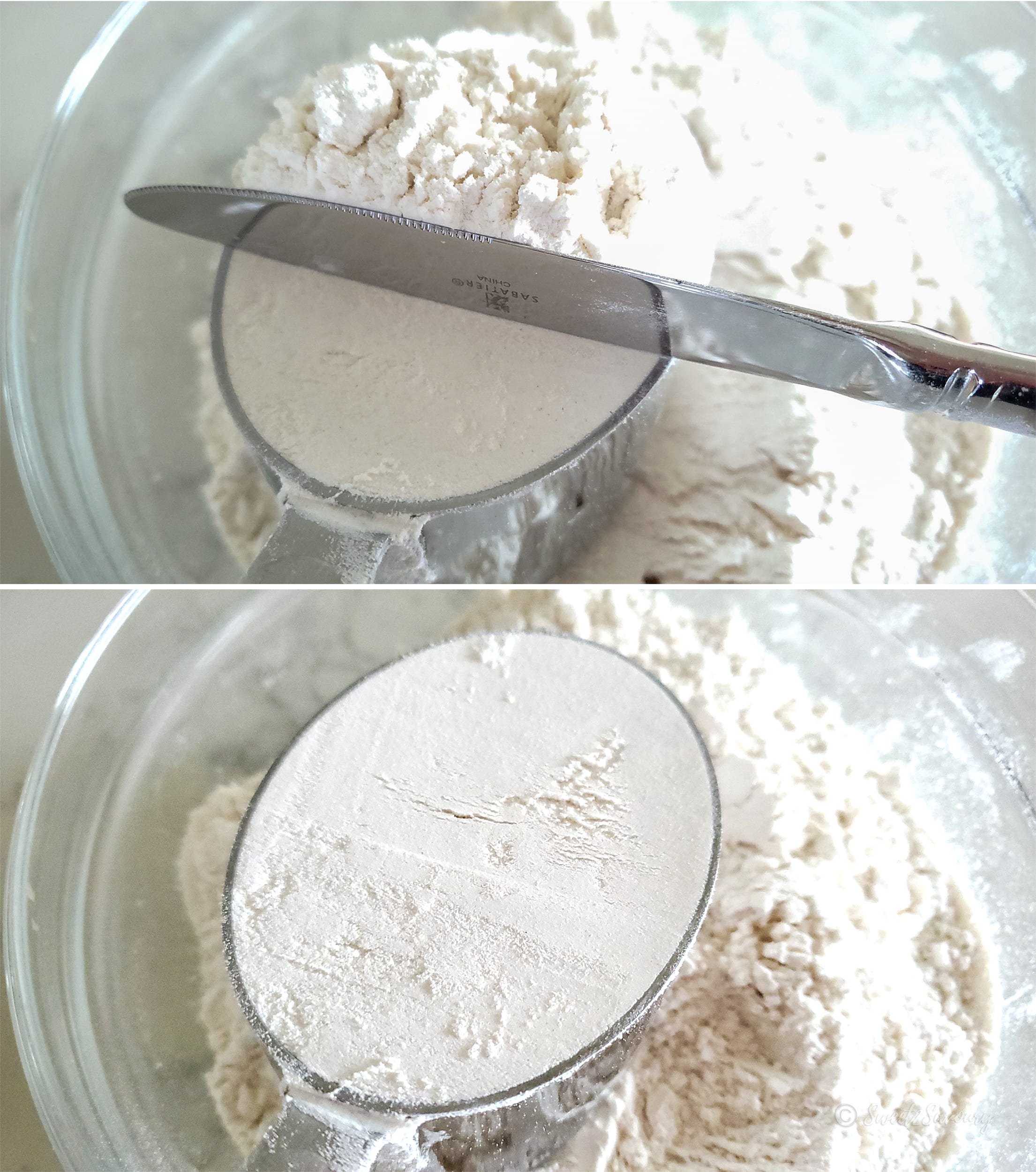
Follow these three simple steps for a precise measurement every single time:
- Fluff the flour first: Stir the flour in its container to loosen it and break up any compacted bits.
- Scoop or spoon the flour into your measuring cup: Gently scoop or spoon the flour into the cup until it’s overflowing.
- Sweep off the excess: Use the flat edge of a butter knife to level off the top of the cup and remove any extra flour.
The Best Accuracy: Why Weighing Flour Wins
While the “scoop and sweep” method is an improvement over dipping your cup into the bag without fluffing your flour, it still relies on measuring by volume. The best way to guarantee perfect baking every single time is to measure your flour by weight using a digital kitchen scale. This is my preferred method when I bake.

Why? Because a cup of flour can weigh anywhere from 100 to 150 grams depending on how humid your kitchen is, how settled the flour got in transit, or how heavily you scooped it. Weighing eliminates all the guesswork. While “scoop and sweep” gets you very close, weighing your ingredients gives you 100% precision.
Here are a few quick tips for mastering the scale:
Why It Matters
Flour naturally settles over time, which means it can become compressed in the bag or container. If you pack it into a measuring cup, you may end up with more flour than your recipe calls for. That can lead to dry cakes, dense cookies, and heavy baked goods.

💡Baking Tips for Best Results
- Do not pack flour into the cup: Treat flour differently from brown sugar. Packing flour adds too much and can throw off the recipe.
- Sift only when the recipe says to: If a recipe calls for “1 cup flour, sifted,” measure first and then sift. If it says “1 cup sifted flour,” sift first and then measure. Notice how the order of instructions changes the process?
- Keep your tools dry: Make sure your measuring cup and knife are completely dry before using them with flour to prevent clumping.
- Use a kitchen scale for accuracy: For the most precise results, weigh your flour in grams instead of measuring by cups.
Pin it for later
Final Tip
If you want consistent baking results, always measure flour carefully and follow the recipe wording exactly. The order of the instructions matters more than you might think.