Authentic Vietnamese Steamed Banana Cake (Bánh Chuối Hấp)
This post may contain affiliate links, meaning I may earn a commission if you purchase through my links. This helps keep my content free. You can read my full disclosure here. Thank you so much for your support! 💗
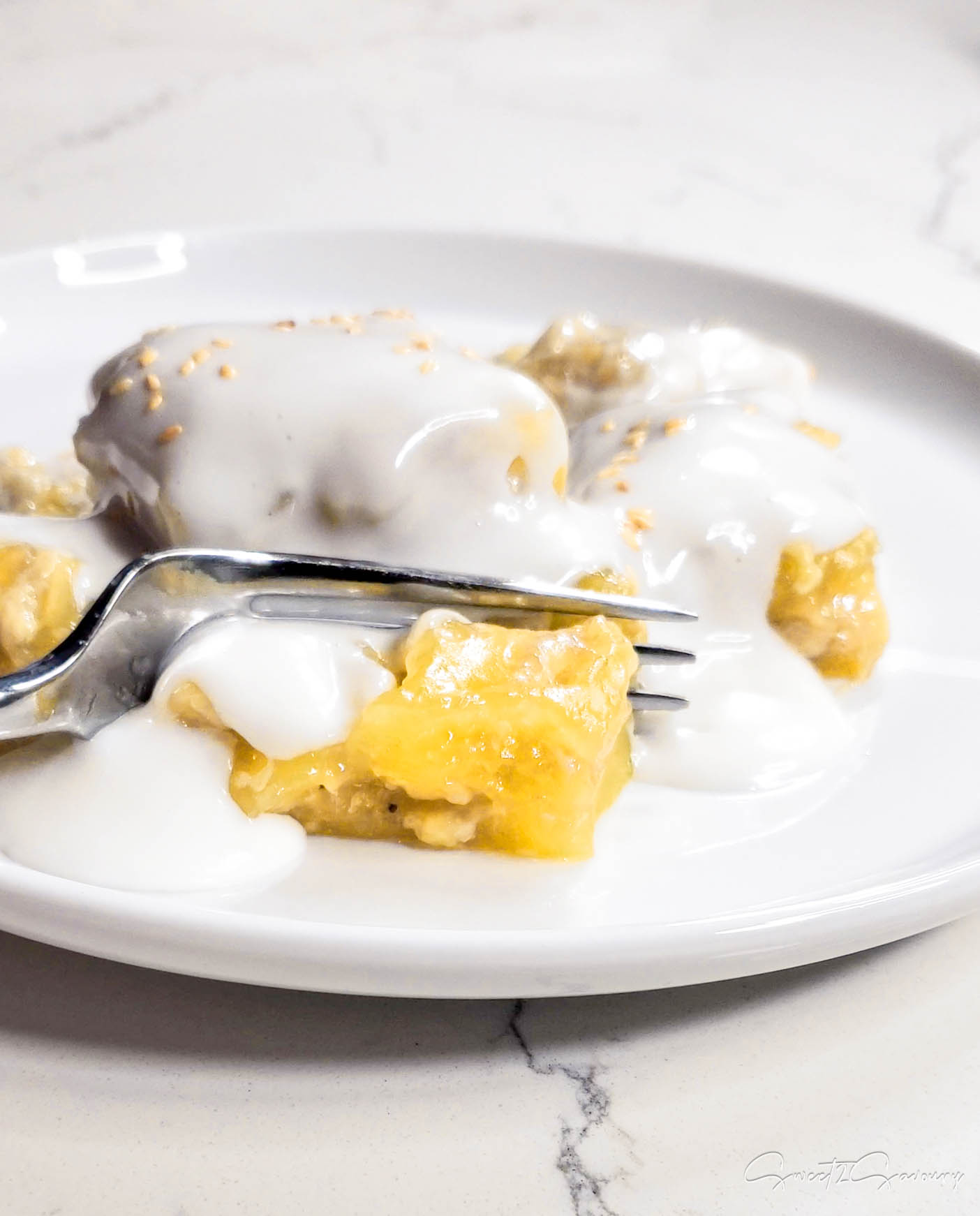
Do you have a bunch of overripe bananas sitting on your counter? Don’t settle for baking another loaf of standard banana bread! Instead, try making Bánh Chuối Hấp, a classic, uncomplicated Vietnamese steamed banana cake.
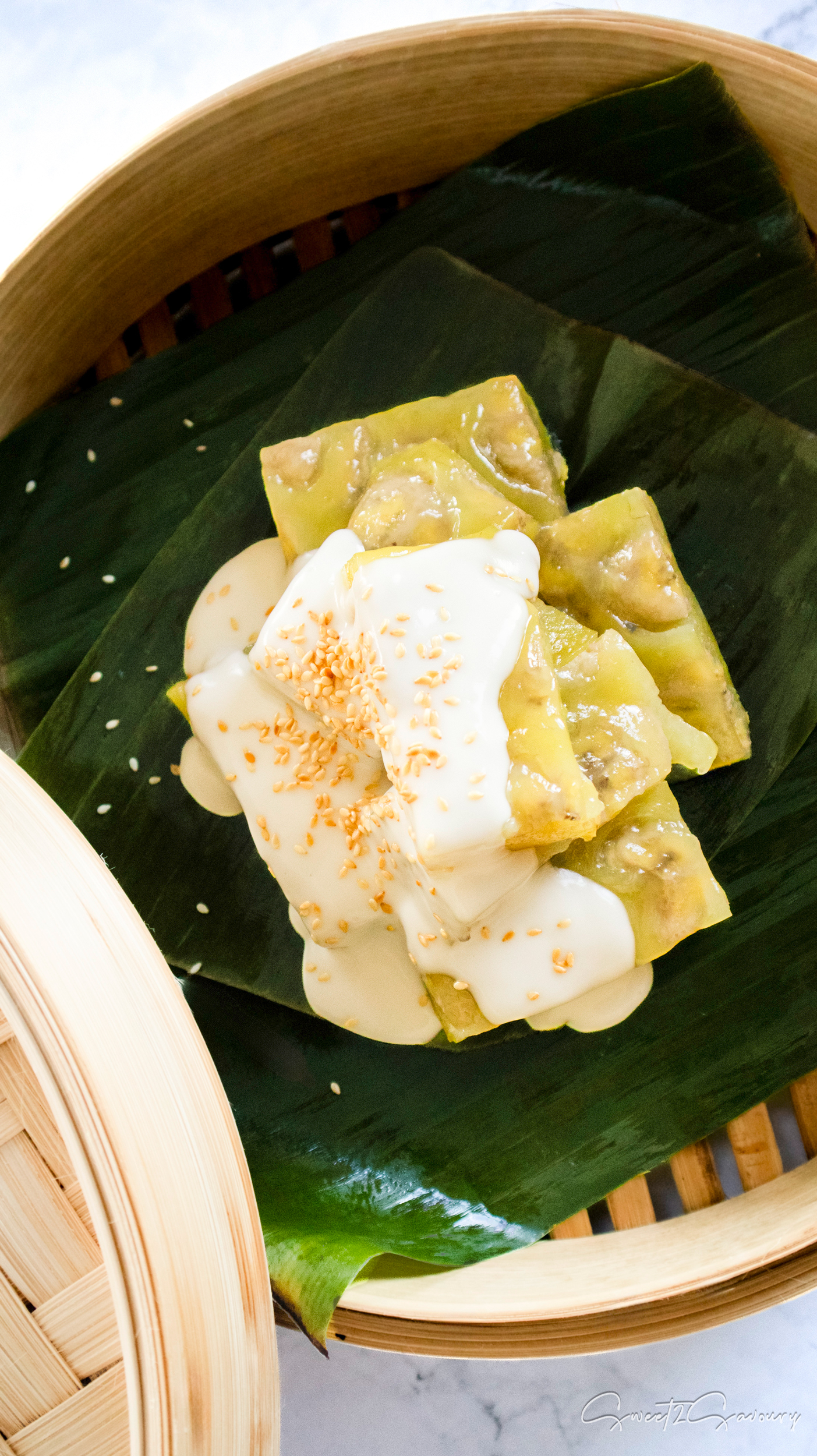
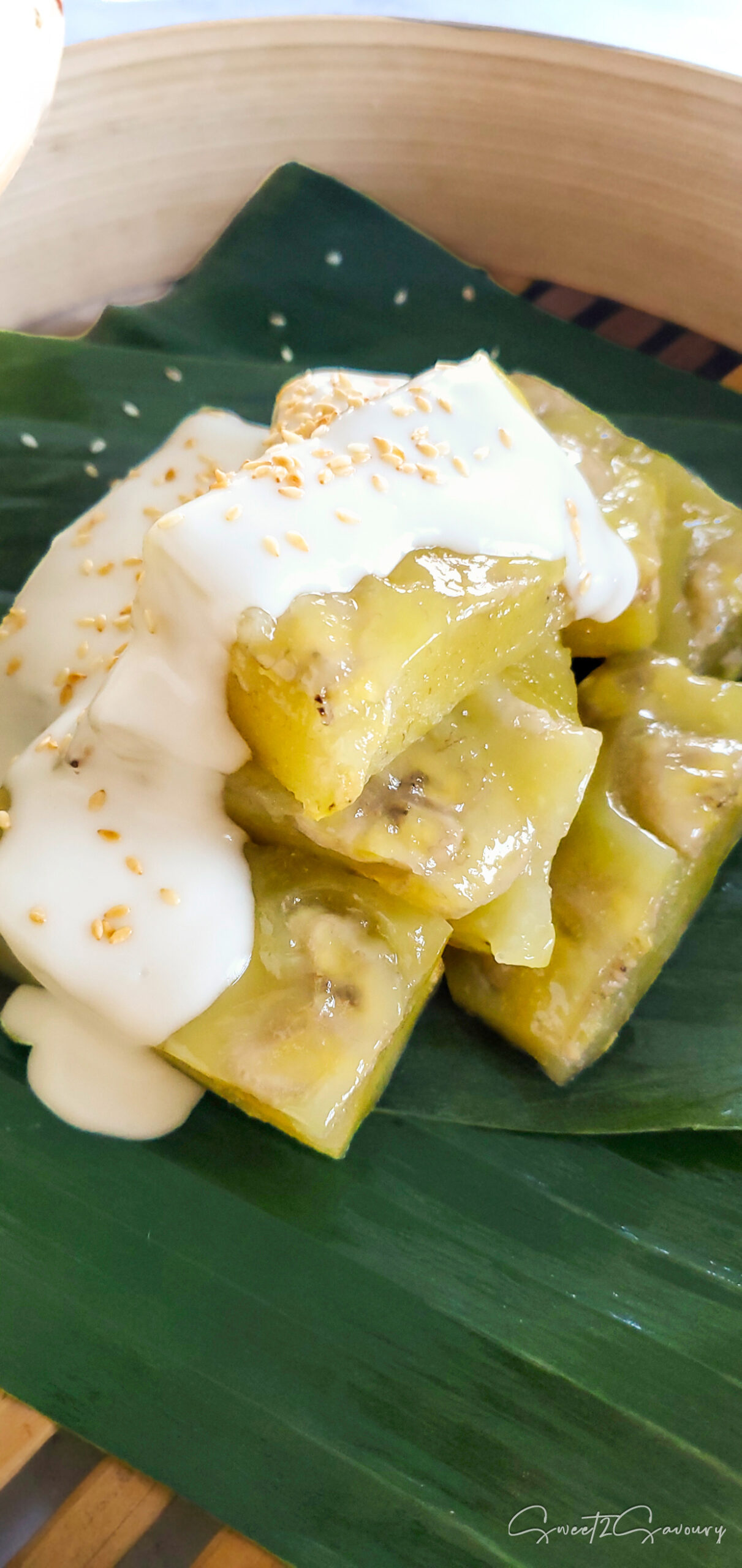
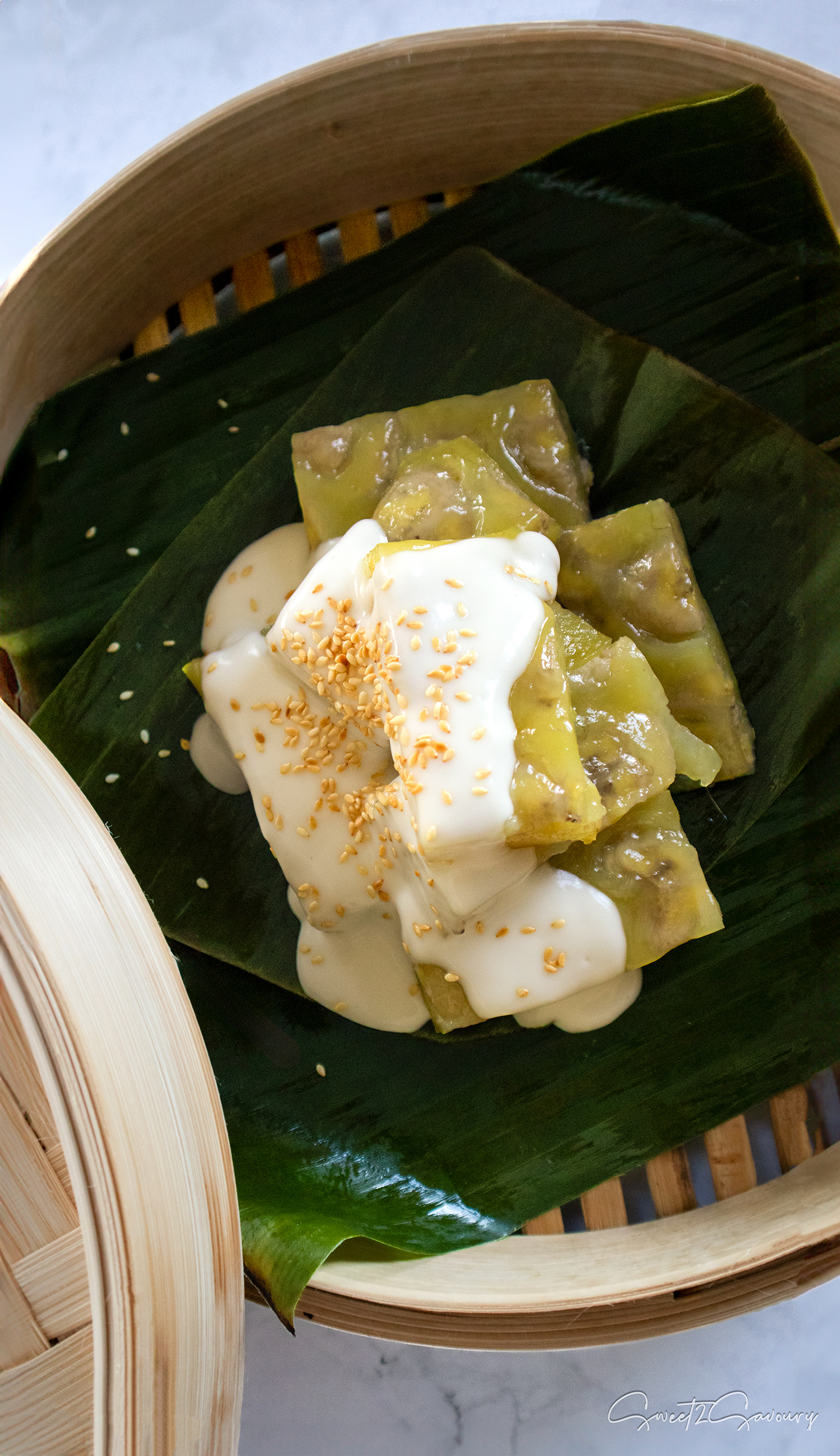
Unlike Western cakes, this traditional dessert features a beautifully chewy, slightly translucent texture thanks to a blend of tapioca and rice flours. It is steamed to perfection in under an hour and served with a rich, slightly salty coconut cream sauce and toasted sesame seeds. It is the perfect balance of sweet, savoury, and tropical flavours!
Why You’ll Love This Recipe
- Unique Texture: The tapioca flour creates a satisfyingly chewy, gel-like bite that is completely addictive.
- Allergy-Friendly: Because it uses rice and tapioca flour, this dessert is naturally gluten-free, vegetarian, and vegan!
- Quick & Easy: It comes together in just 4 simple steps without needing an oven.
- The Ultimate Coconut Sauce: The creamy coconut topping perfectly contrasts the sweetness of the bananas.
Ingredients You Will Need
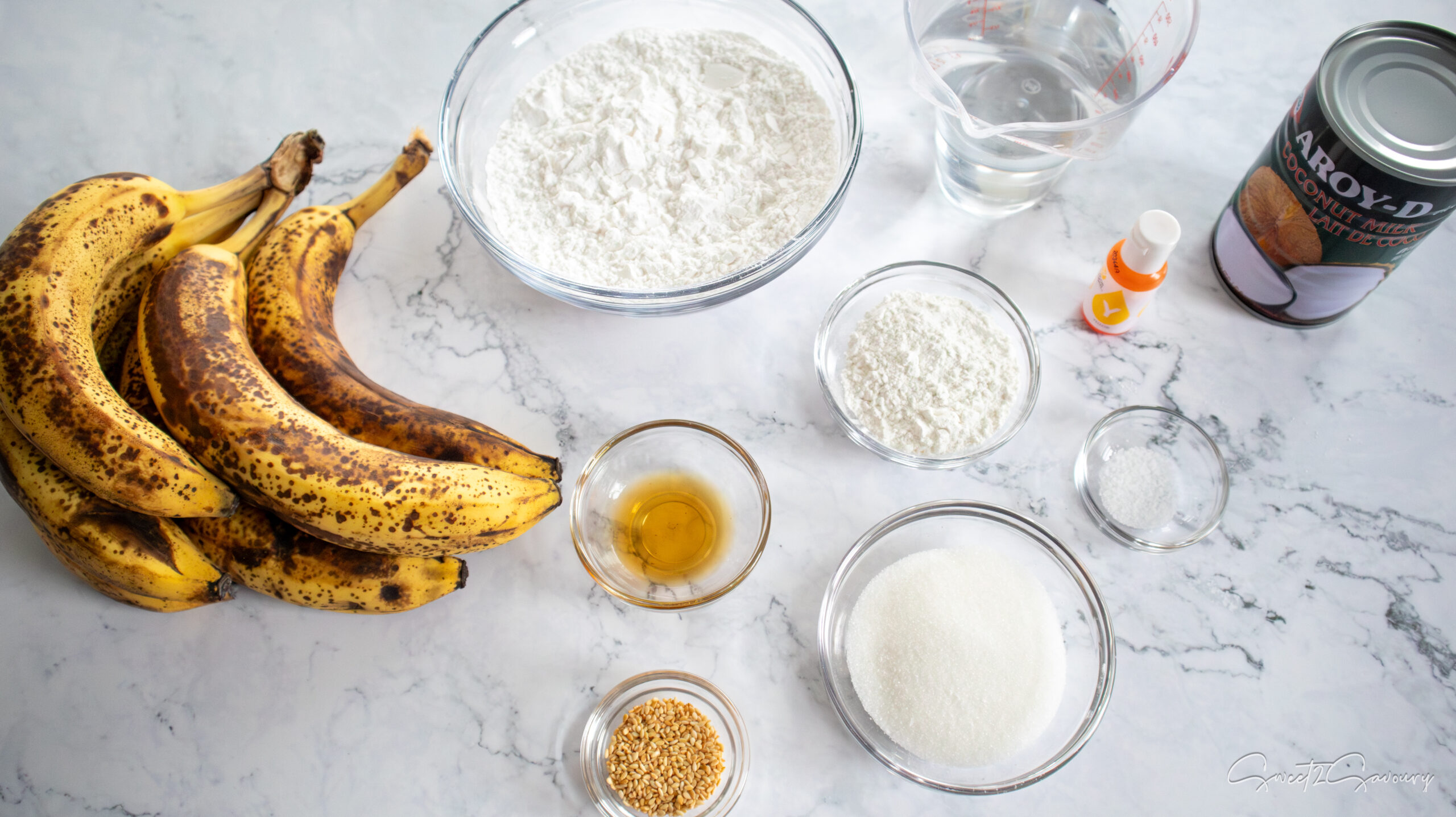
This authentic dessert relies on a few specific Asian pantry staples to achieve that signature chewy texture.
For the Banana Cake:
- Overripe Bananas: The darker and spottier, the better! This recipe is adapted for standard Cavendish grocery store bananas.
- The Flours: You will need both Tapioca Flour (for chewiness) and regular Rice Flour (not glutinous rice flour) for structure.
- Flavourings: White granulated sugar, a pinch of Kosher salt, and vanilla extract.
- Yellow Food Colouring (Optional): A drop or two gives the cake that vibrant, classic bakery look.
For the Coconut Sauce & Garnish:
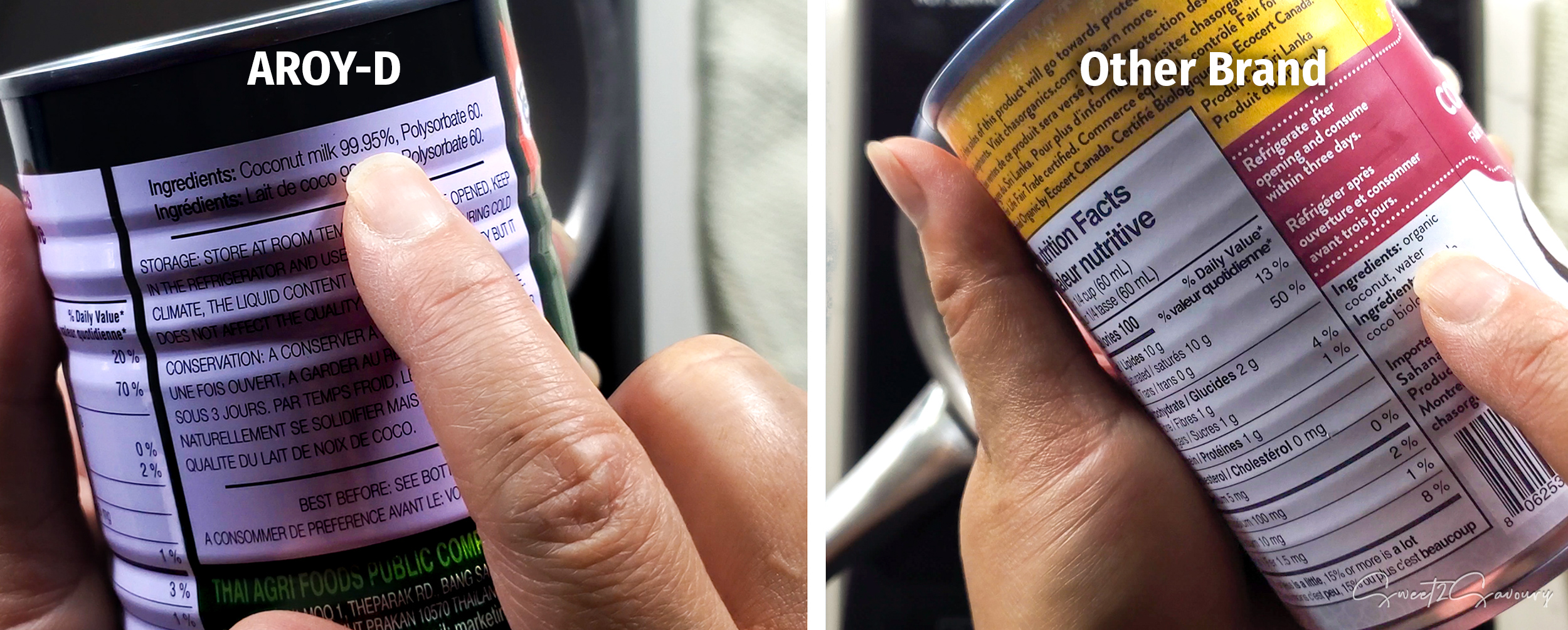
- Coconut Milk: For the absolute best flavour and thickest texture, use Aroy-D brand coconut milk. It contains 99.95% pure coconut milk without the watery fillers found in other brands.
- Cornstarch: To thicken the sauce.
- Sugar & Salt: We intentionally make this sauce slightly salty to cut through the sweetness of the cake!
- Garnish: Toasted sesame seeds or crushed roasted peanuts.
How to Make Steamed Banana Cake (Step-by-Step)
Phase 1: Slice and Season the Bananas
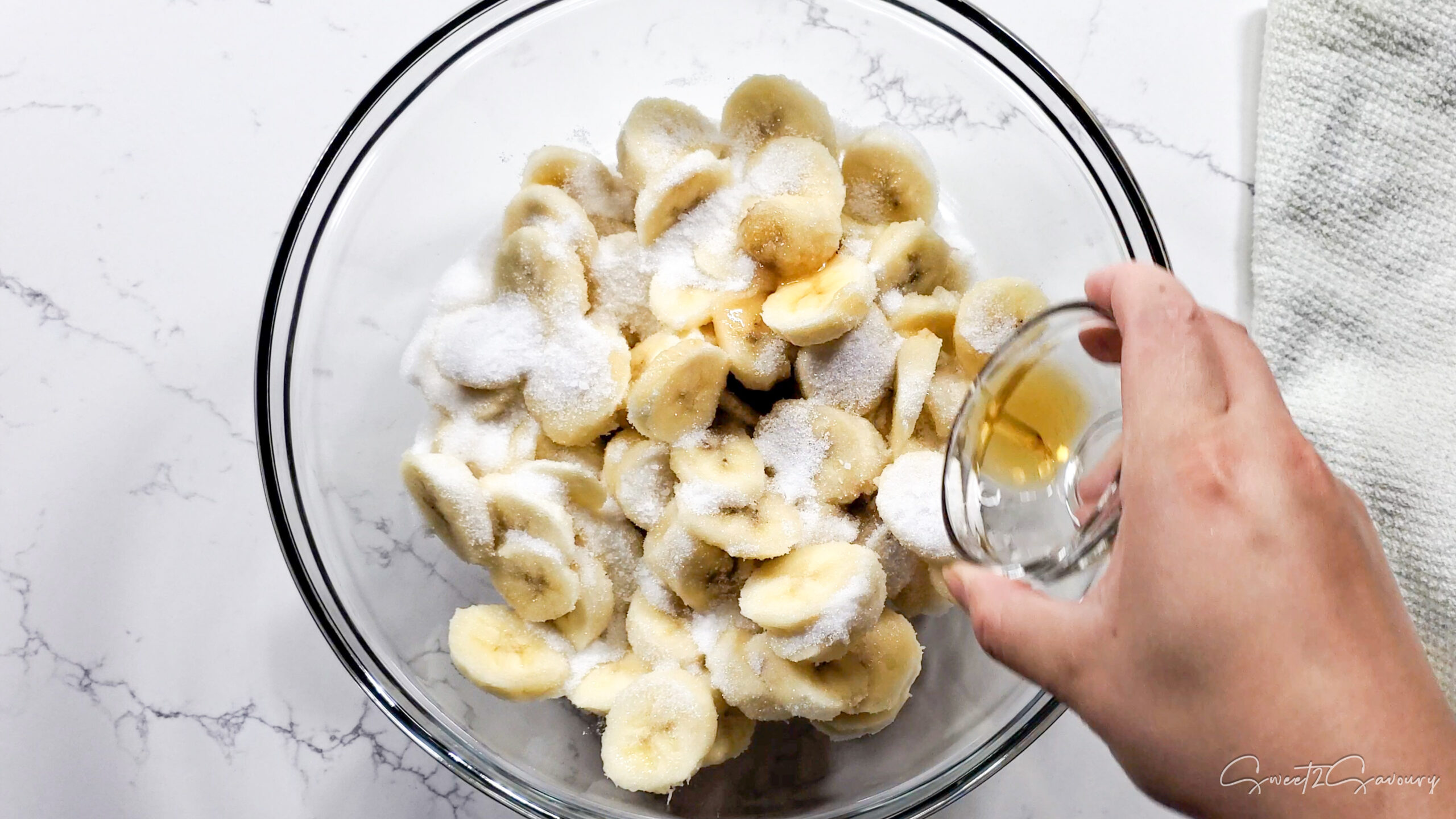
- Peel and slice the overripe bananas into ½-inch thick rounds. Place them into a large mixing bowl.
- Sprinkle the sugar, salt, and vanilla extract over the slices. Do not stir! Ripe bananas are fragile and will turn to mush. Just give the bowl a gentle shake to distribute the sugar.
- Let the bananas rest for 10 minutes to draw out their natural, sweet juices.
Phase 2: Mix the Batter
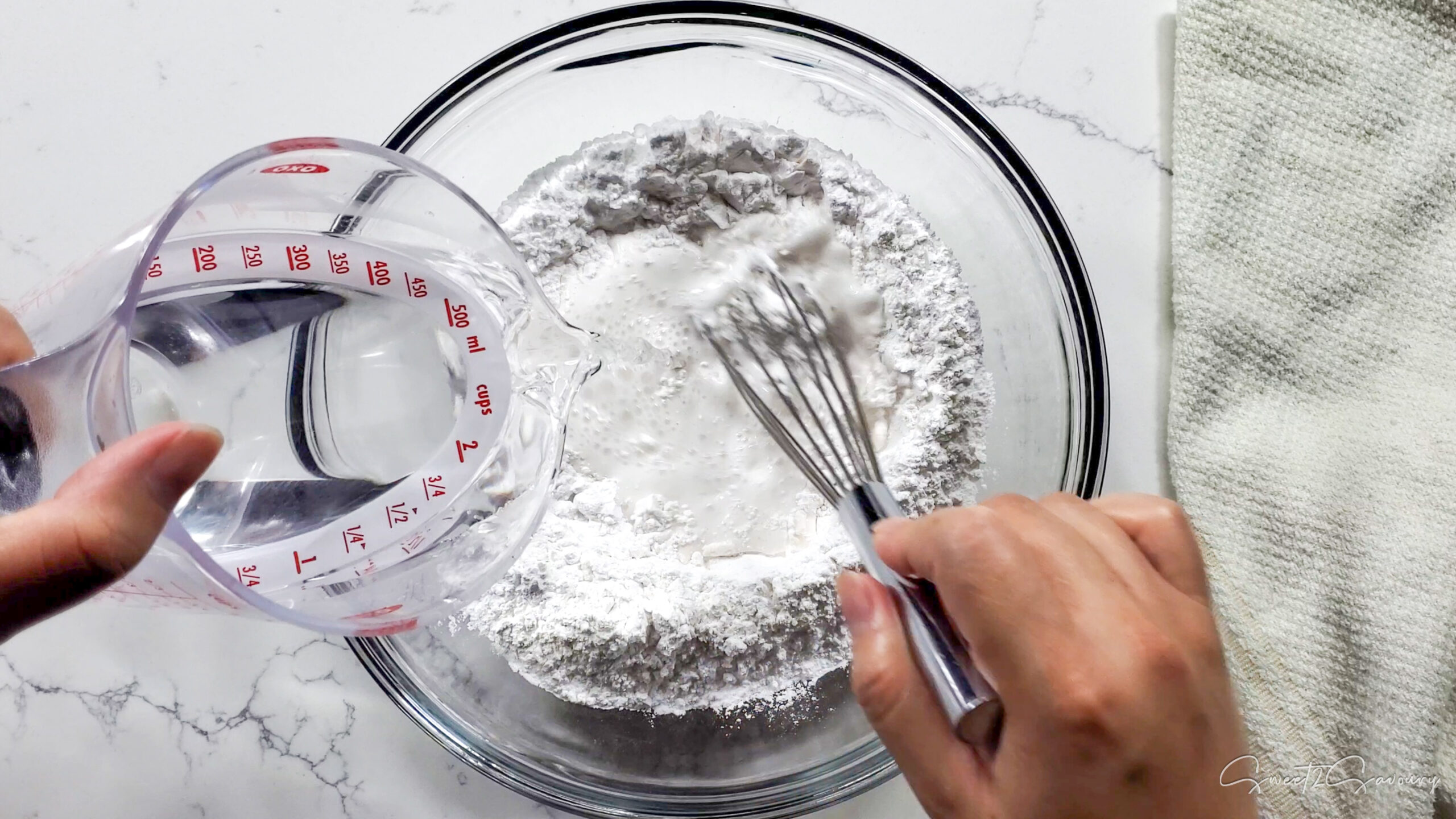
- In a separate bowl, whisk together the tapioca flour and rice flour.
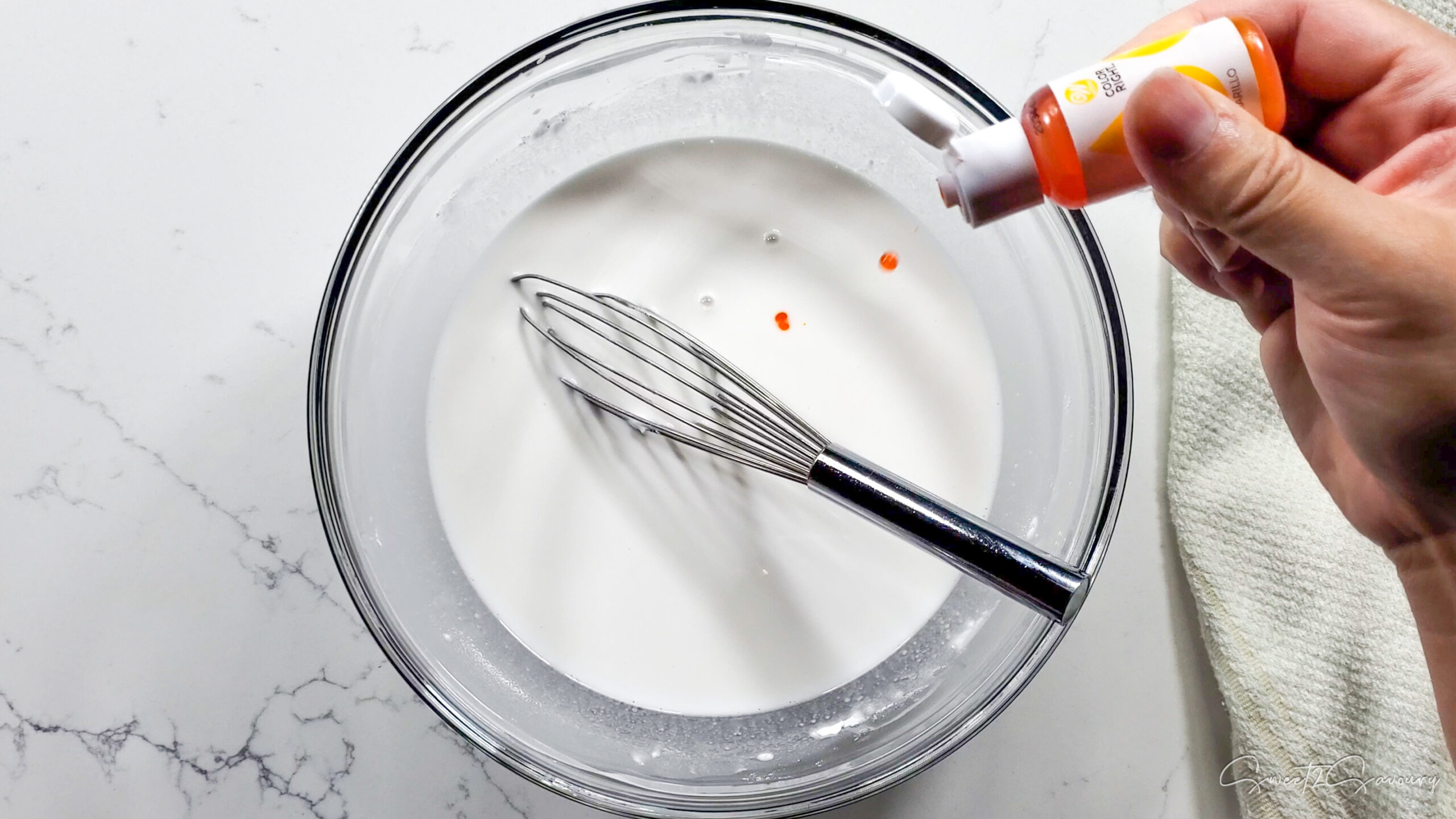
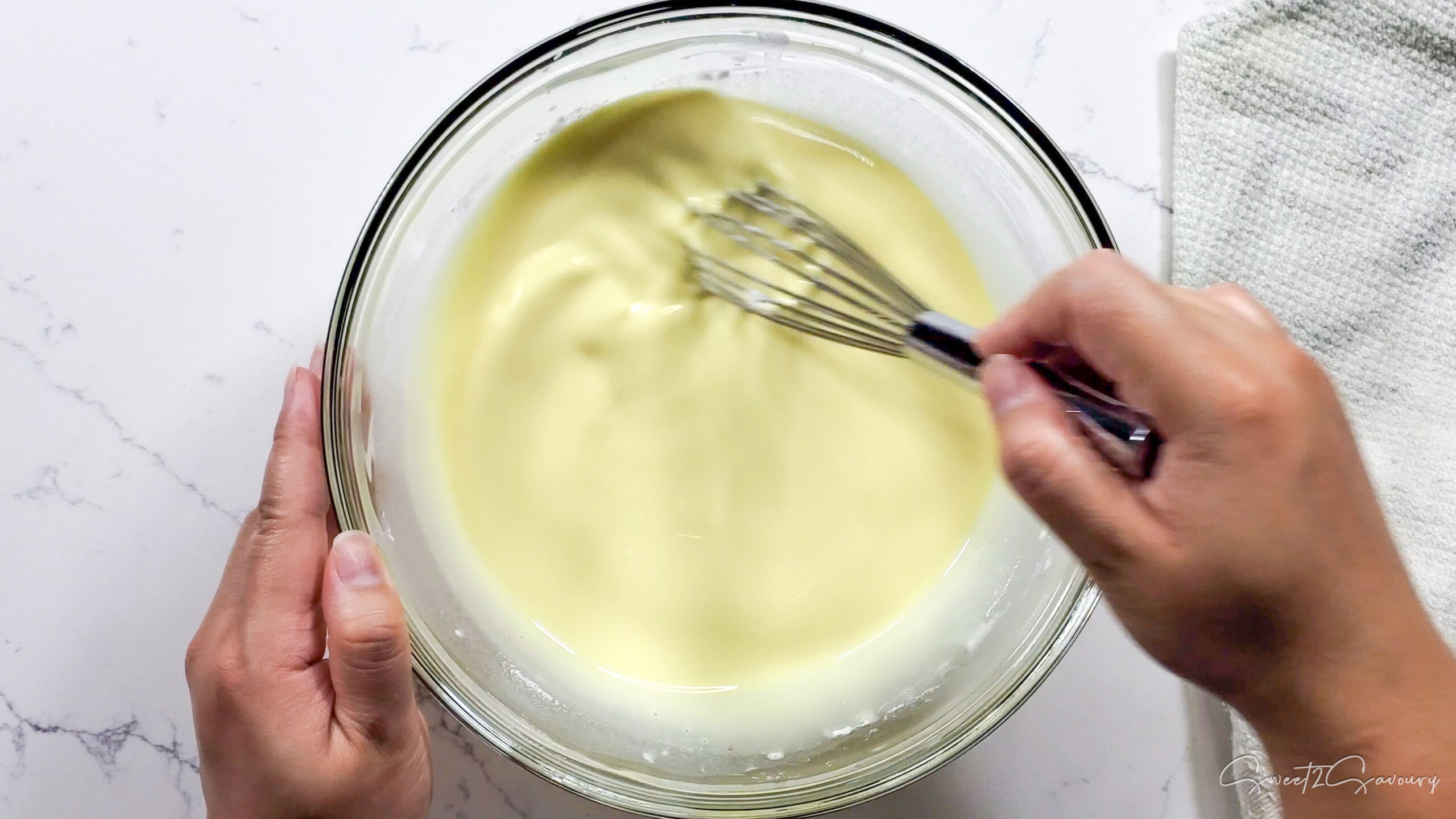
- Slowly pour in lukewarm water, whisking constantly until a smooth, thin batter forms. (Stir in 1-2 drops of yellow food colouring here if using).
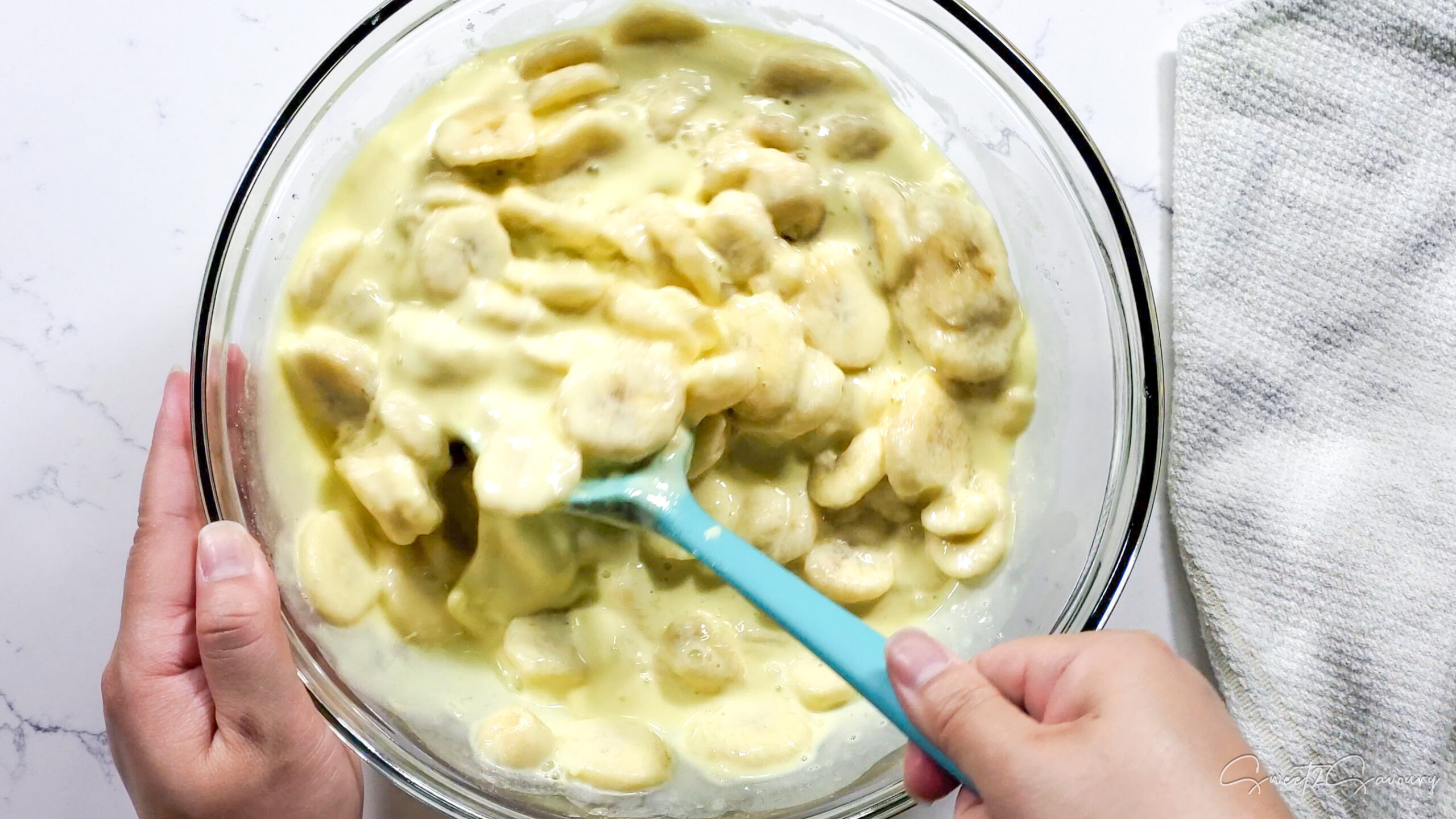
- Pour the batter over the resting bananas. Using a silicone spatula, very gently fold the batter and bananas together until combined.
Phase 3: Steam the Cake
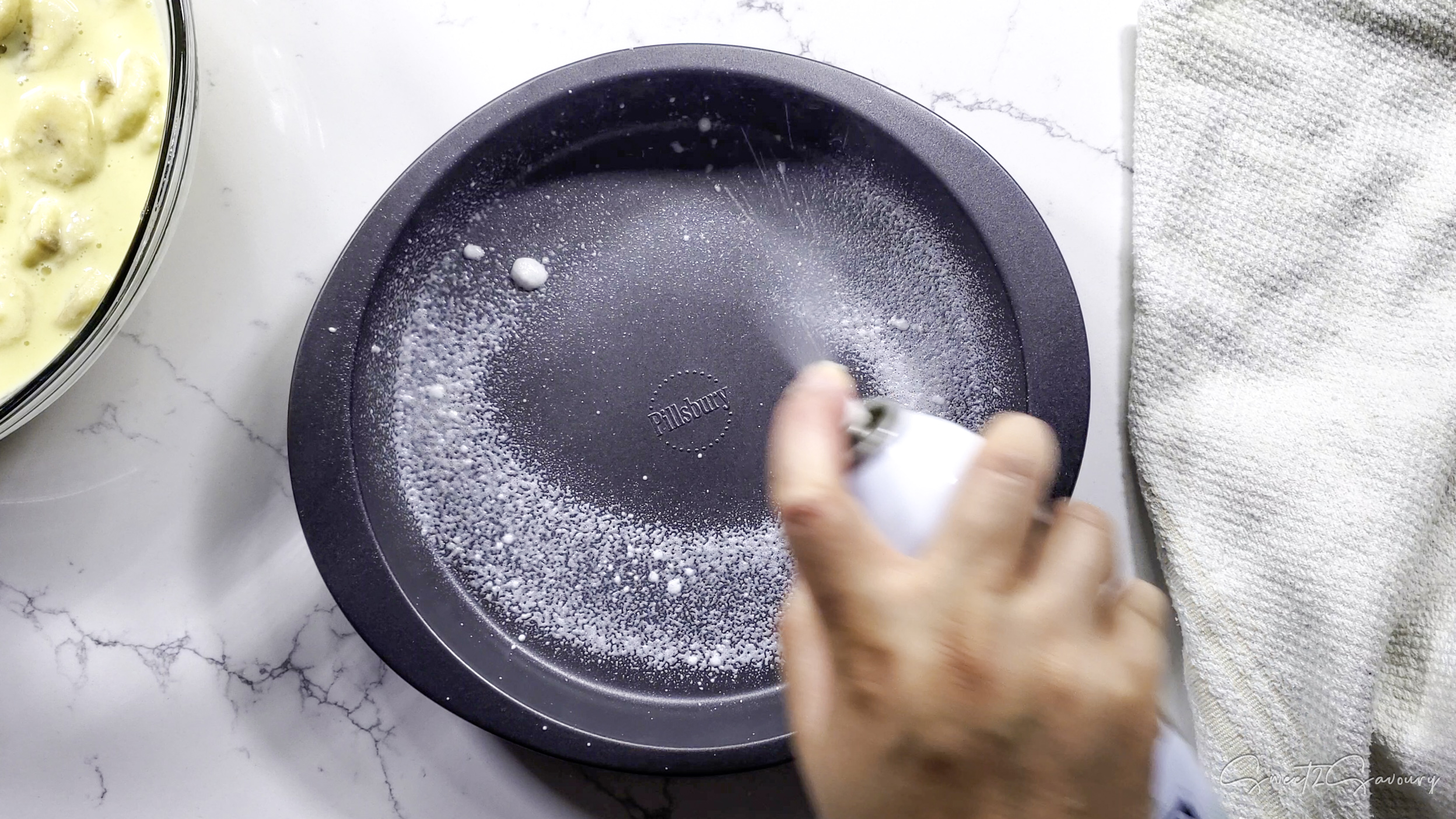
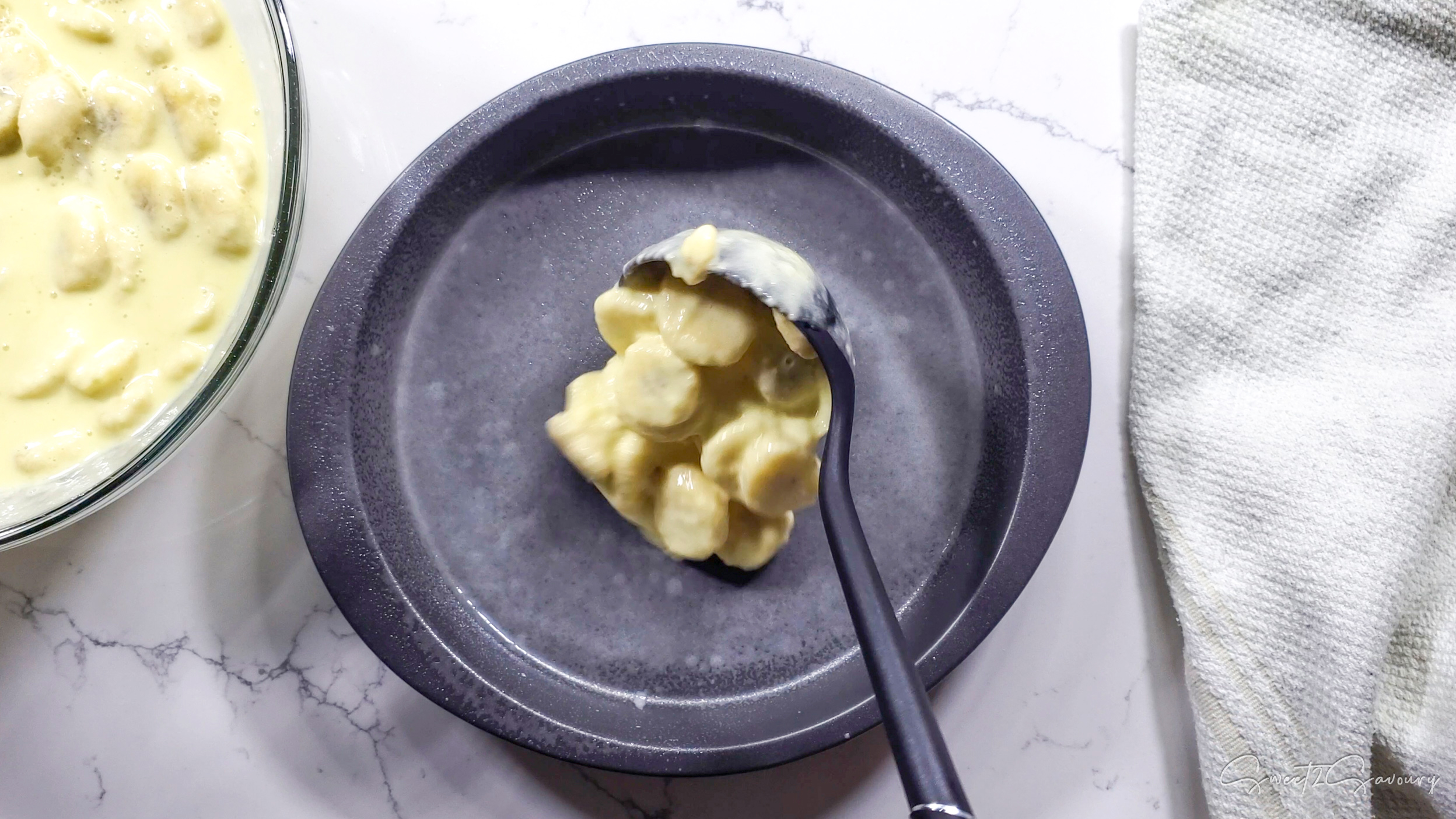
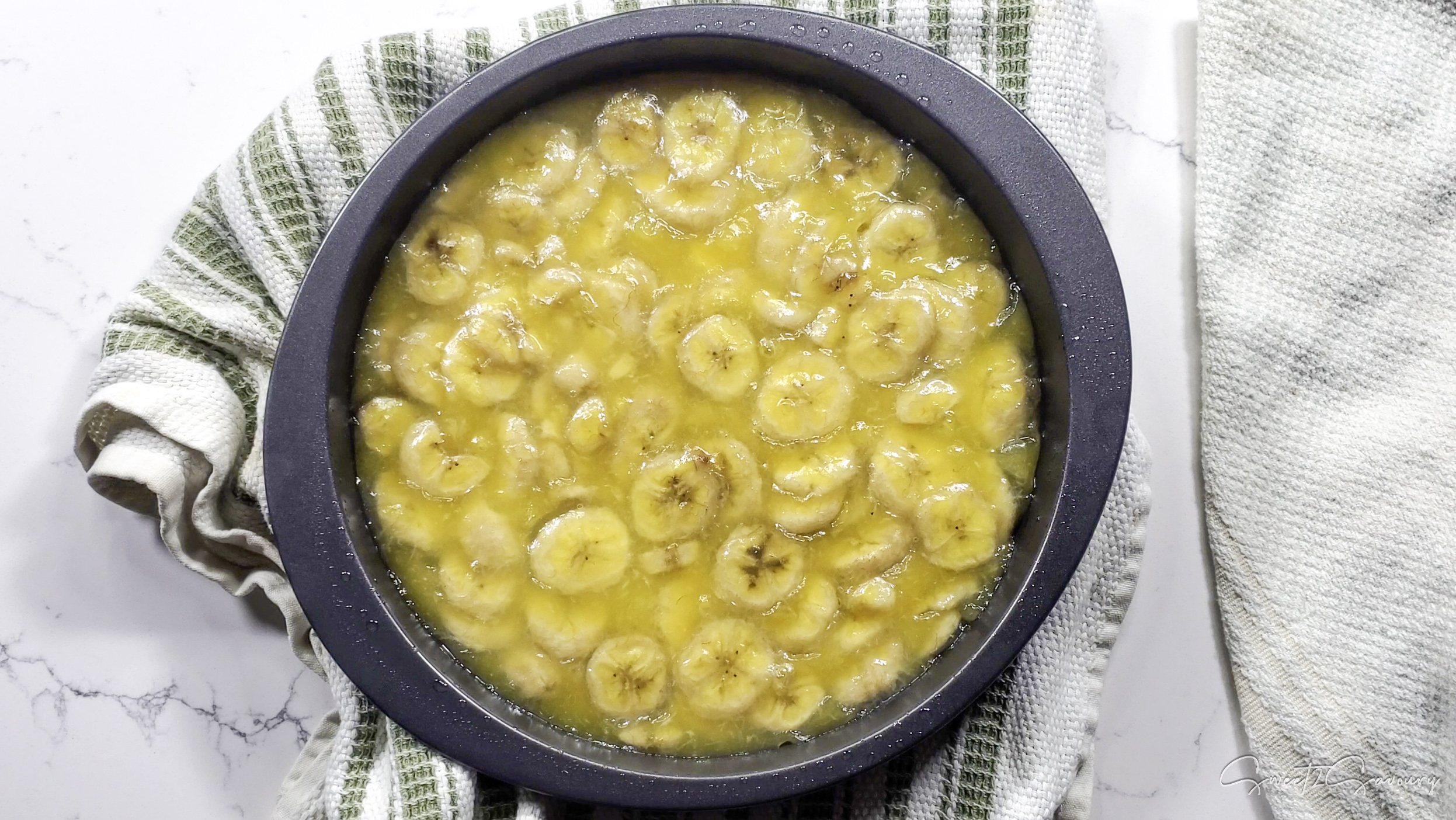
- Lightly grease a 9-inch round non-stick pan. Pour the batter into the pan until it’s halfway full. (Note: This recipe makes enough for two 9-inch cakes, so you will need to steam in batches or use two pans).
- Place the pan into a bamboo steamer (or a standard pot steamer) over boiling water. If using a standard pot steamer, wrap the lid with a clean hand towel to prevent water from dripping onto the cake. Steam for 30 minutes.
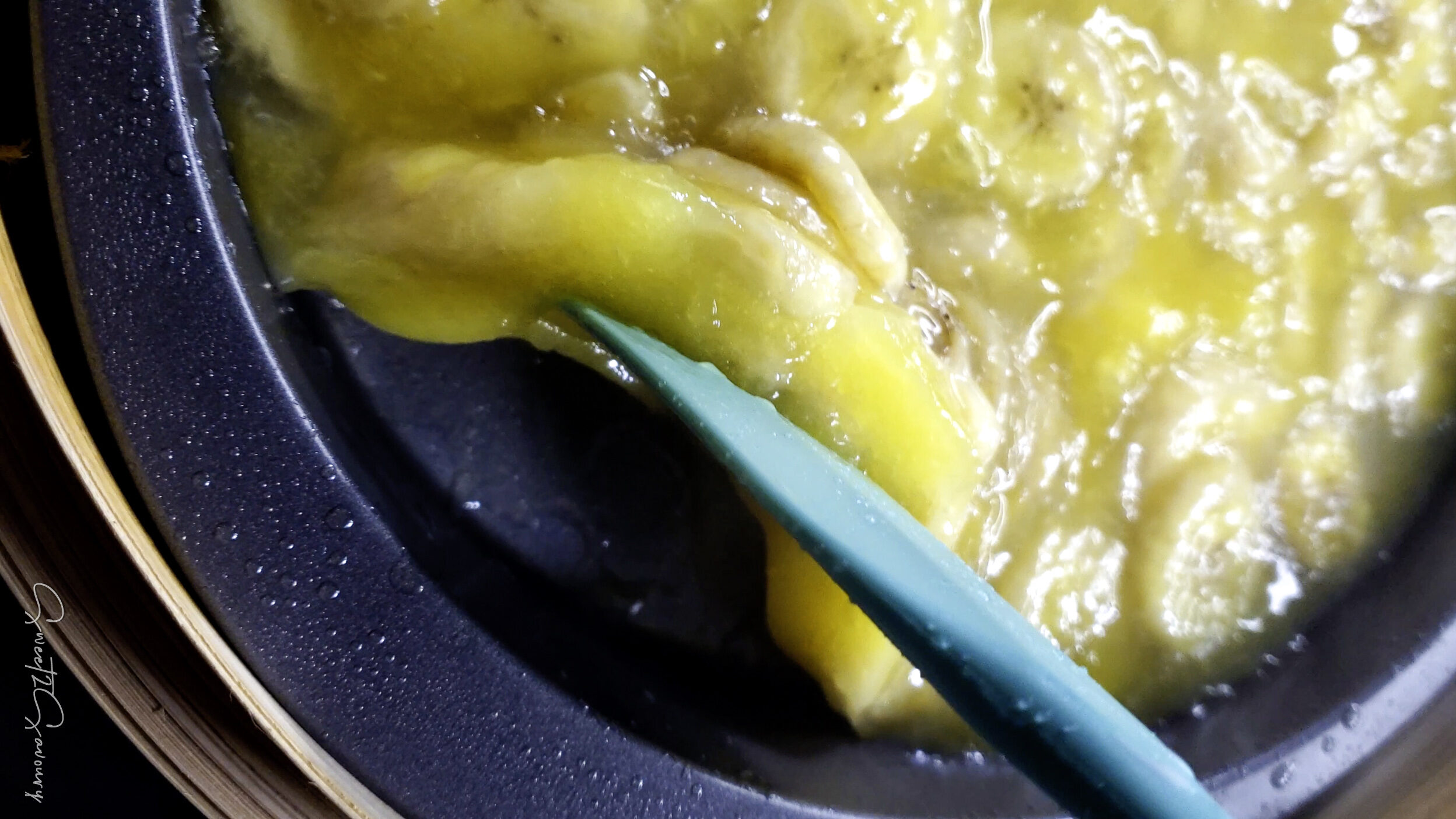
- You will know it is done when the batter changes from a chalky, opaque yellow to a slightly translucent, gel-like yellow and the edges easily pull away from the pan. Let the cake cool completely.
Phase 4: Make the Coconut Sauce
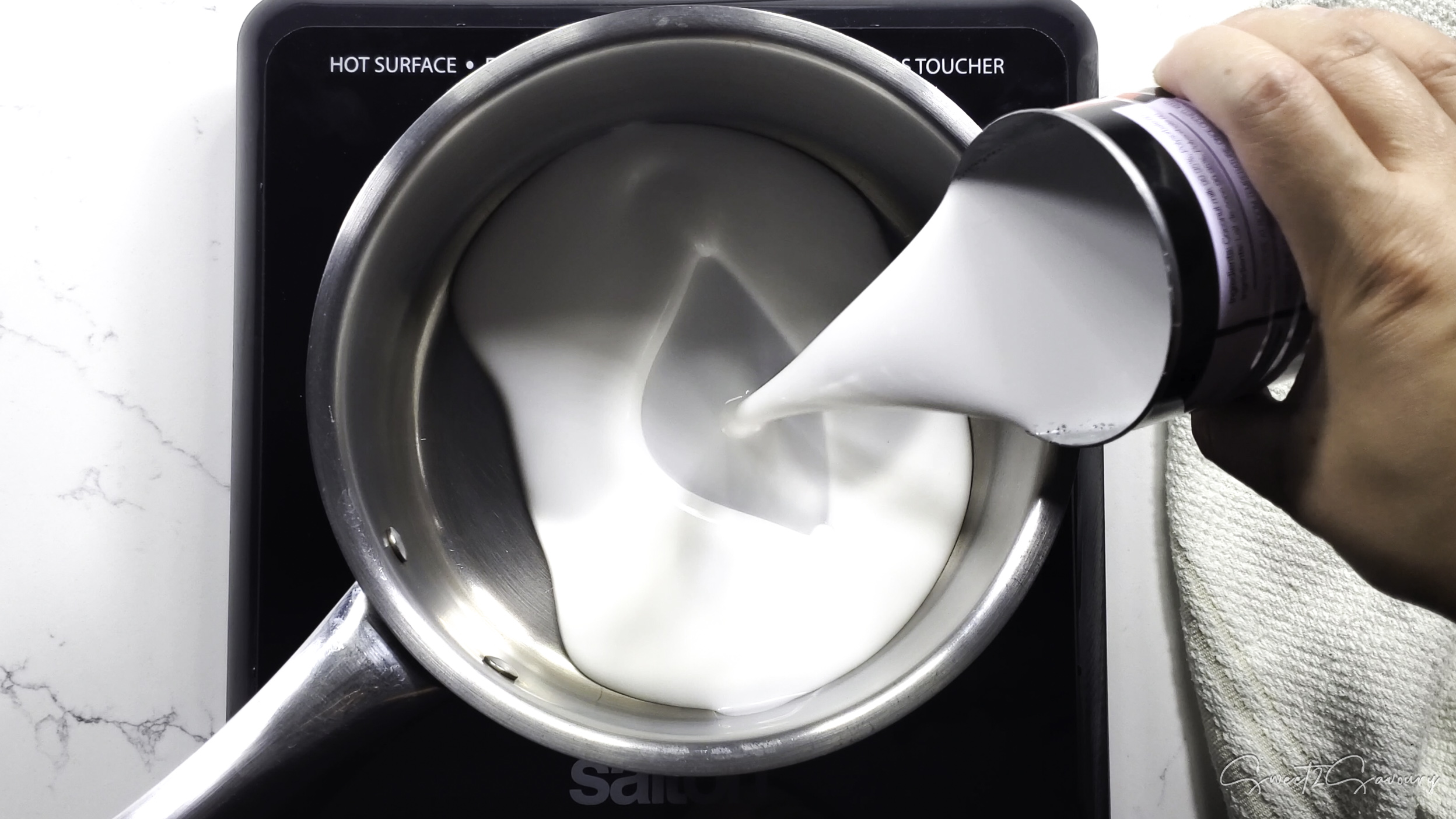
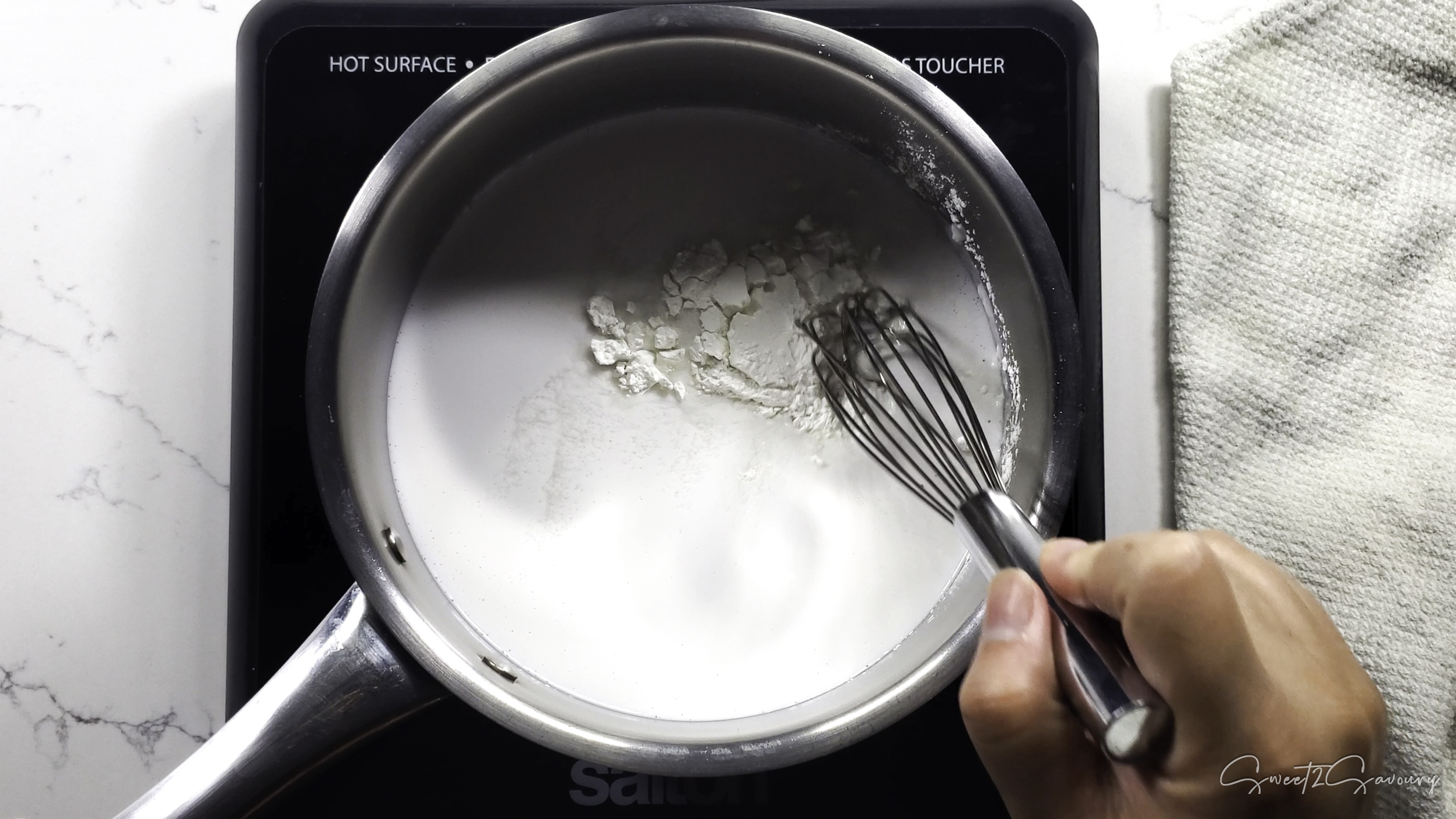
- While the cake steams, combine the coconut milk, sugar, salt, and cornstarch in a small saucepan.
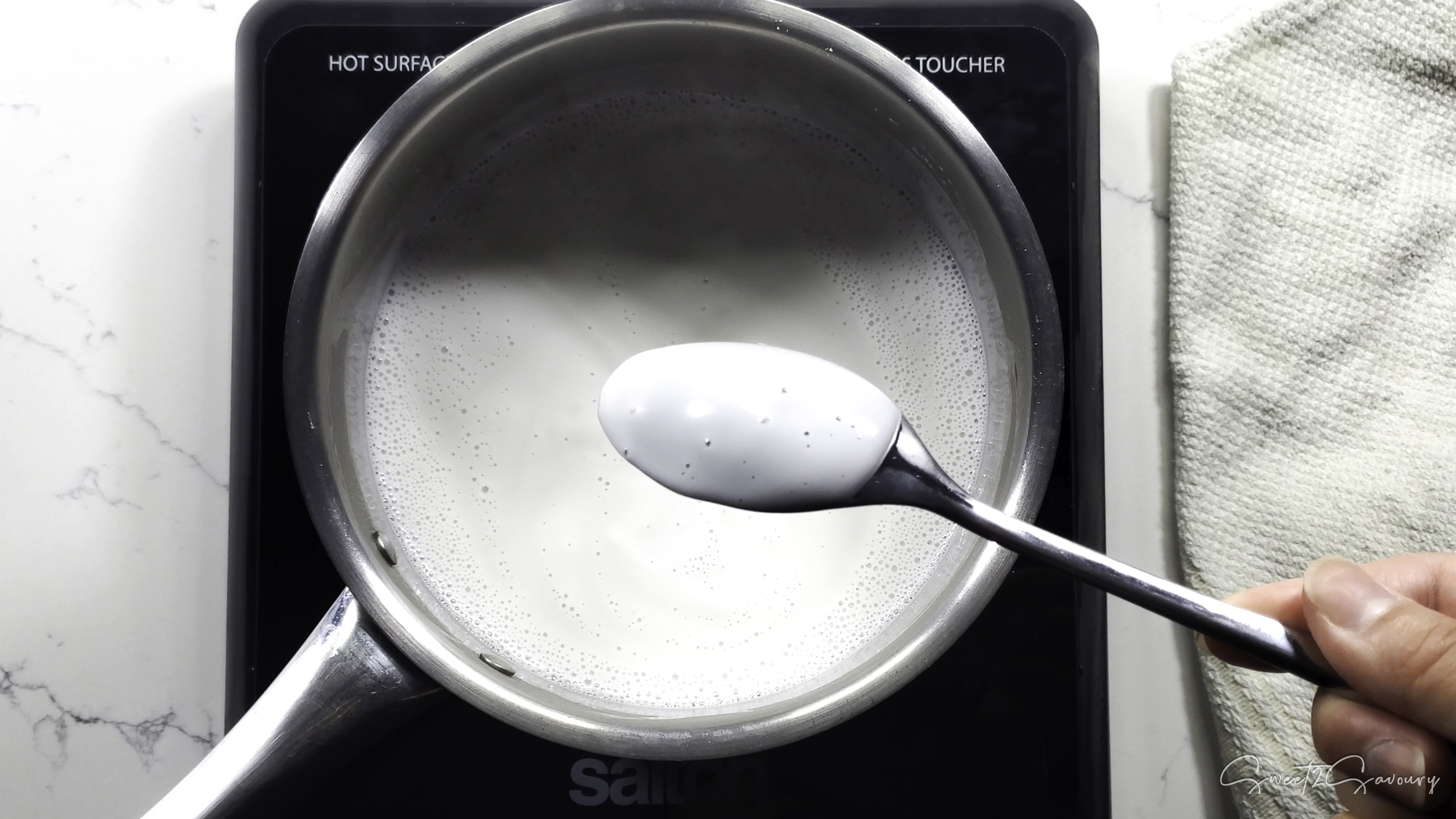
- Cook over medium heat, whisking constantly for 3 to 4 minutes until the sauce bubbles and thickens enough to coat the back of a spoon. Remove from heat and let it cool.
💡Pro Tips for the Best Bánh Chuối Hấp
- Room Temperature is Key! Do not try to eat this cake while it is hot. When hot, the tapioca is too soft and sticky. As it cools to room temperature, the starches set, creating that perfect, firm, chewy texture.
- Prevent Water Drips: If you are using a standard metal pot with a glass lid instead of a bamboo steamer, wrap a clean kitchen towel securely around the lid. This catches the condensation and prevents puddles of water from dripping onto your cake!
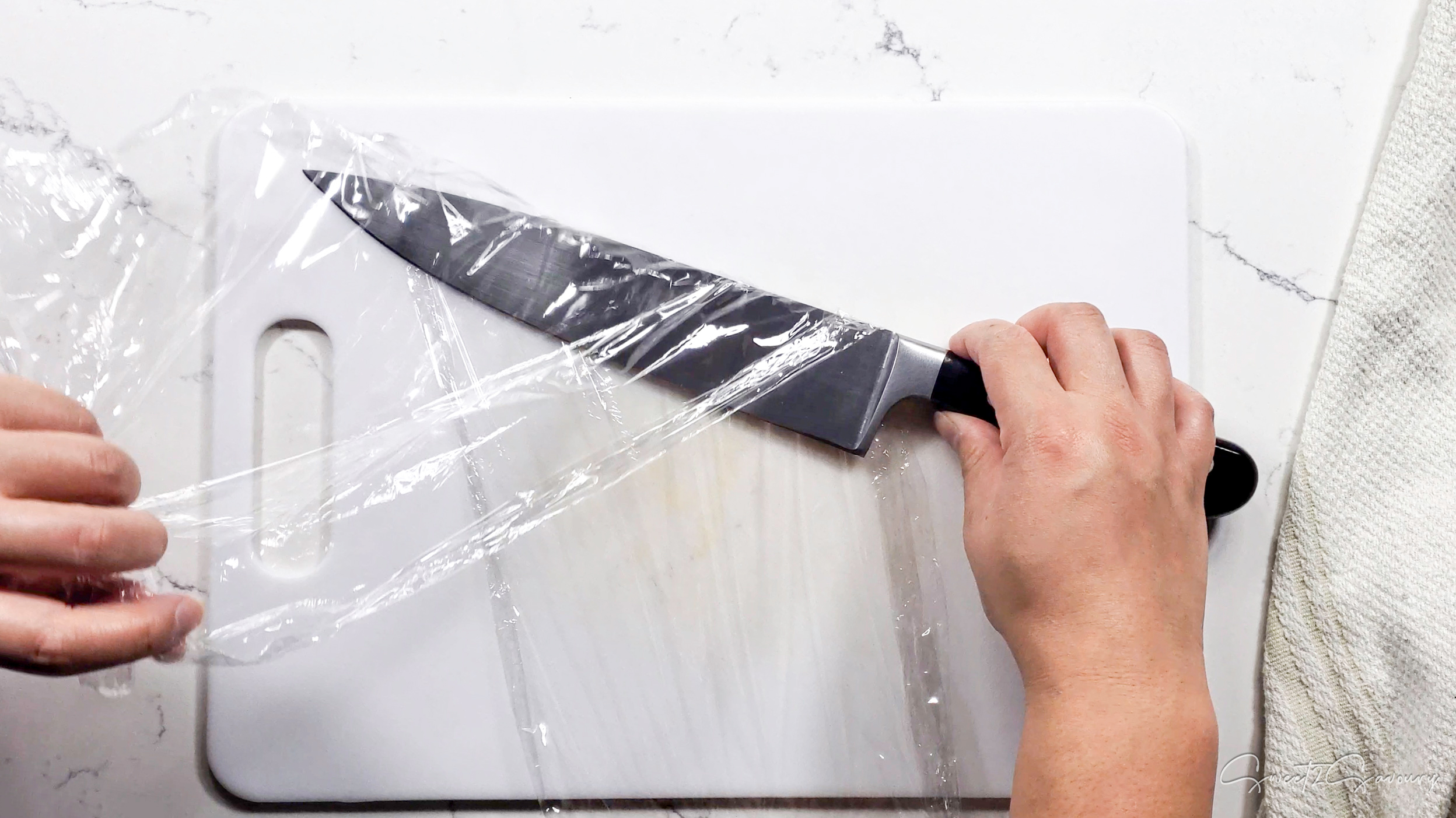
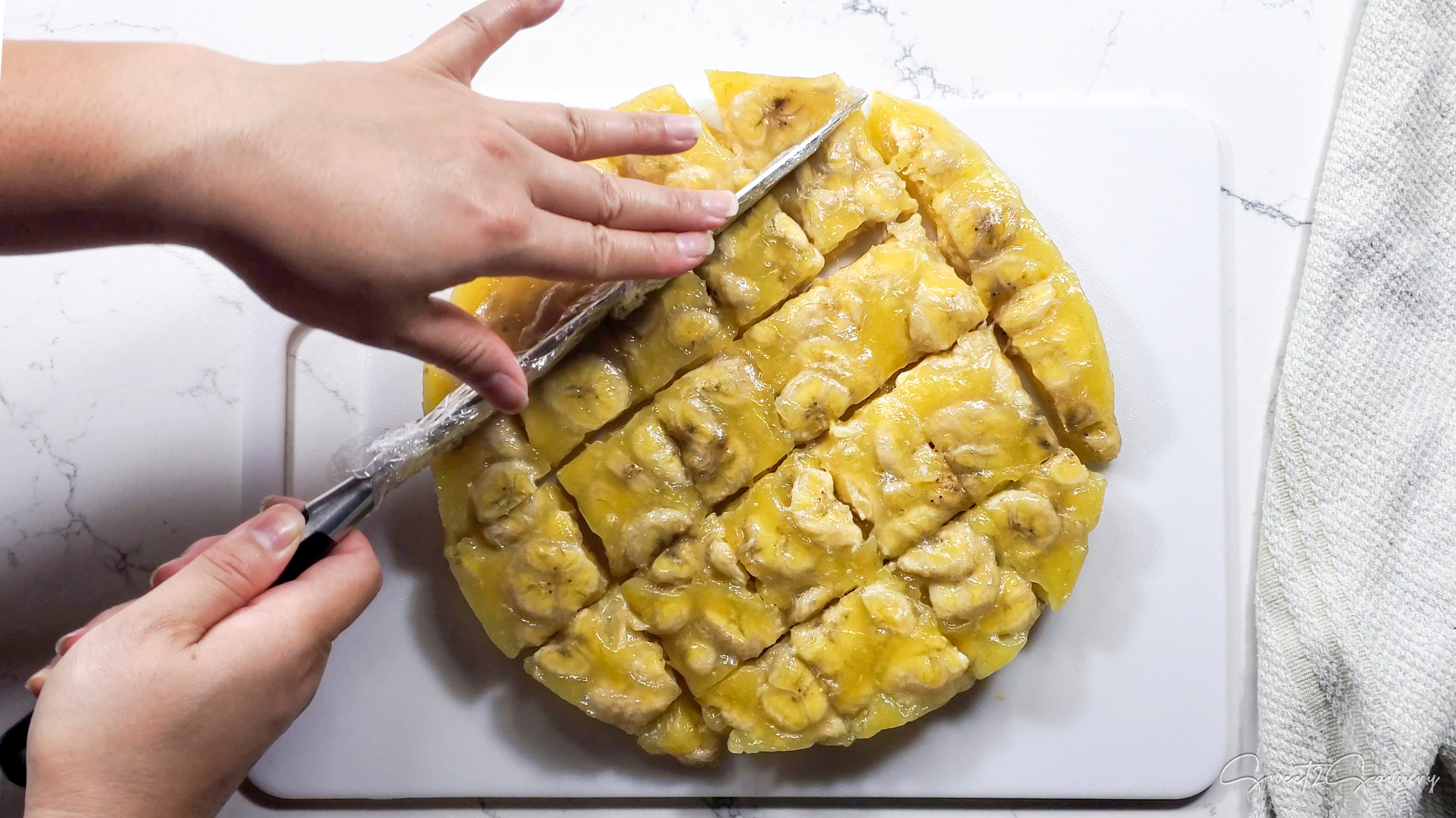
- How to Cut the Cake: Because the cake is wonderfully sticky and chewy, wrap your kitchen knife tightly in a layer of plastic wrap before slicing. The knife will glide right through without making a mess!
More Banana & Asian Dessert Recipes
Looking for more ways to satisfy your sweet tooth? Check out these favourites:
- Banana Coconut Upside Down Bundt Cake: A brilliant twist on a baking classic.
- Chinese Egg Tart (Dan Tat) With Plum Rose: Another authentic, bakery-style Asian dessert, with fruit!
Frequently Asked Questions
Can I use baby bananas instead of regular Cavendish bananas?
Yes! Traditionally, this dessert is actually made with sweet baby bananas. If you can find them, absolutely use them. Because they have slightly less moisture, you will need to reduce the water in the batter by ¼ cup.
Why is the coconut sauce so salty?
If you taste the sauce on its own, it will taste saltier than a standard dessert sauce. This is intentional! In Vietnamese desserts, a savoury, salty coconut cream is specifically paired with sweet, starchy components to create a perfectly balanced bite.
How do I store leftovers?
Store leftover banana cake in an airtight container at room temperature for up to 2 days, or in the fridge for up to 4 days. If refrigerated, the cake will become very hard. Simply microwave a slice for 15-20 seconds to bring back that soft, chewy texture!
Pin it for later
Vietnamese Steamed Banana Cake In 4 Easy Steps
Ingredients
- 6 large very ripe Bananas peeled and cut into 1/2-inch slices
- ¼ cup white granulated sugar
- ¼ teaspoon kosher or fine sea salt or 1/8 teaspoon Table salt
- 1 teaspoon vanilla extract or 2 teaspoons vanilla sugar
- 1¾ cup tapioca flour
- 3 Tablespoons rice flour (not glutinous)
- 1¼ cup lukewarm water
- 2 drops yellow food colour
- 1 can Coconut Milk* see notes for more info
- 4 Tablespoons granulated white sugar
- 1 Tablespoon cornstarch
- ¾ teaspoon kosher or fine sea salt or 1/2 teaspoon Table salt
- 1 Tablespoon toasted sesame seeds or roasted (crushed) peanuts divided for each serving

Method
- Prep the Bananas: Peel and slice the bananas into ½-inch rounds. Place in a large bowl and sprinkle with the sugar, salt, and vanilla extract. Do not stir. Gently shake the bowl to distribute the seasonings, then let rest for 10 minutes.
- Mix the Batter: In a separate bowl, whisk together the tapioca flour, rice flour, and lukewarm water until a smooth batter forms. Stir in 1-2 drops of yellow food coloring, if using.
- Combine: Pour the liquid batter over the rested bananas. Using a rubber spatula, very gently fold the mixture together until combined, being careful not to mash the bananas.
- Steam the Cake: Lightly grease a 9-inch round cake pan. Pour the batter in until the pan is halfway full. Place the pan in a steamer basket over boiling water. Steam for 30 minutes, or until the batter turns slightly translucent and gel-like. Remove and let cool completely. (Note: You will need to do this in two batches).
- Make the Coconut Sauce: In a small saucepan, combine the coconut milk, sugar, cornstarch, and salt. Cook over medium heat, whisking constantly for 3–4 minutes until it bubbles and thickens. Remove from heat and let cool.
- Serve: Ensure the cake has cooled to room temperature (this is crucial for the chewy texture!). Wrap your knife in plastic wrap and slice the cake into wedges or squares. Top with the coconut sauce and a sprinkle of toasted sesame seeds. Enjoy!